 Shaun Dunn
Noticed your boiler pressure creeping up or dropping down, and not sure if it’s a problem? You’re not alone. It’s one of the most common things Edinburgh homeowners ask about, and it’s more confusing than it needs to be.
Sometimes the reading is perfectly normal. Other times, it’s your boiler quietly telling you something needs attention.
Once you understand what the pressure should be doing, it’s usually much easier to know what’s fine and what isn’t. Get it wrong, though, and you can end up with leaks, extra strain on the system, or repairs you didn’t plan for. This guide keeps it straightforward.
What Is the Ideal Boiler Pressure?
For most UK heating systems, the answer’s fairly simple.
When the heating’s off and the system’s cold, your boiler pressure should sit between 1.0 and 1.5 bar. Around 1.2 bar is the sweet spot for most systems, including modern high-efficiency boilers like the Worcester 4000/8000 and Vaillant ecoTEC, which are designed to run well in that range.
Here’s the bit that catches people out: boiler pressure doesn’t stay fixed all day. When the heating comes on, the water warms up and expands, so the reading naturally rises. Around 1.8 to 2.2 bar while the heating is running is usually nothing to worry about.
If it climbs much higher, the boiler has a safeguard built in. Most systems have a Pressure Relief Valve, or PRV, which opens at around 3.0 bar to release water and protect the system from damage.
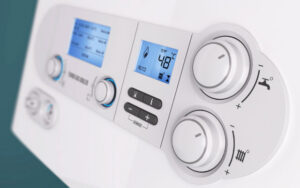
How you check the pressure depends on the boiler. Older models usually have a circular dial on the front panel. Newer boilers often show a digital reading, sometimes after pressing an “i” or “menu” button. Either way, if it’s sitting around 1.2 bar when cold and rises steadily when the heating’s on, your boiler’s probably doing exactly what it should.
How to Check Your Boiler Pressure
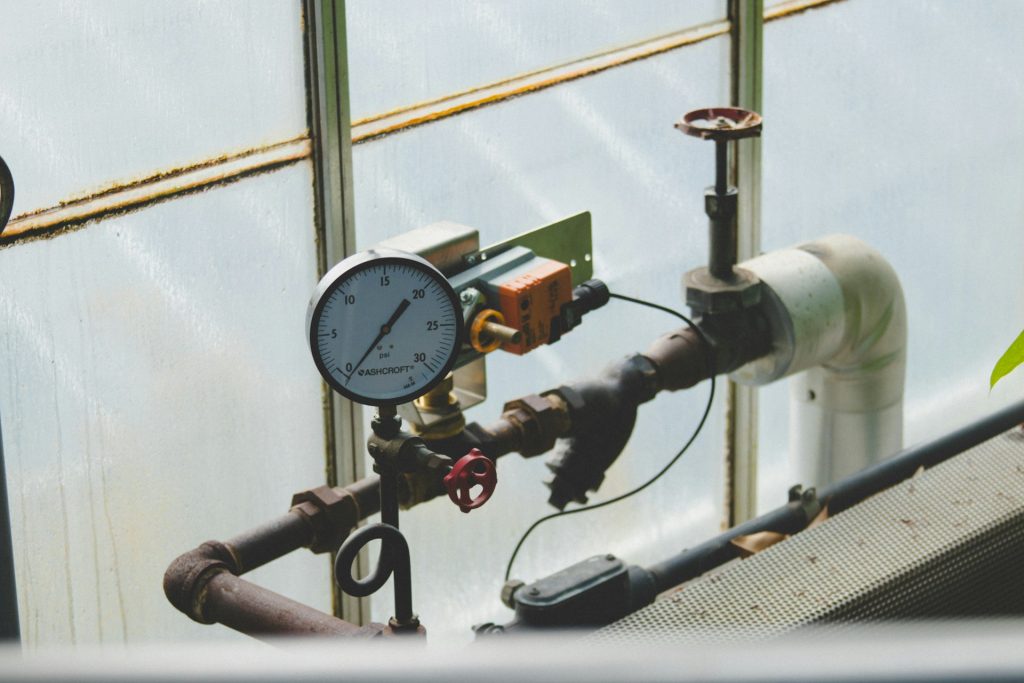
Checking the pressure is straightforward once you know where the gauge is. On most boilers, it’s on the front panel, sometimes tucked behind a flap, just to keep things interesting.
Always check when the heating’s off and the system’s cold. A hot system gives a higher reading, which can make normal pressure look like a problem.
One thing worth knowing if you’re in Edinburgh or the Lothians: plenty of homes have a system boiler with a separate expansion vessel, and in that setup, the pressure gauge might not be on the boiler itself. It could be in the airing cupboard or on nearby pipework. Have a proper look around before assuming it’s gone missing. It’s usually there somewhere.
Boiler Pressure Too Low: What to Look For
If pressure drops below 1.0 bar, performance starts to suffer. Below 0.5 bar, the boiler will usually shut itself off completely. That’s called a lockout.
It sounds dramatic, but it’s actually a safety feature. The boiler’s protecting the heat exchanger and internal components from damage.
Low pressure is often caused by small leaks, recently bled radiators, or gradual pressure loss over time. None of that’s automatically a disaster. But if the pressure keeps dropping, it needs watching.
You might also see a manufacturer error code on the display:
- Worcester: A1 or CE 224
- Vaillant: F22 or F75
- Ideal: F1
The signs are usually fairly obvious: no heating, no hot water, a boiler that won’t fire, or a fault code sitting there waiting to be noticed. Low pressure isn’t a minor glitch. It’s the boiler stepping in to protect itself.
How to Repressurise Your Boiler
Topping up boiler pressure is usually straightforward, as long as you take it slowly.
Turn the boiler off and let it cool first. No shortcuts there. Then find the filling loop. On older systems, it’s usually a flexible silver hose connecting two pipes; on newer boilers, there’s often a built-in filling point, normally opened with a small lever underneath.
Open the valves slowly. You should hear water entering the system and see the gauge begin to rise. Aim for 1.2 to 1.5 bar while the system’s cold, then close the valves fully and check the reading holds steady.
The common mistake is rushing it. Open the filling loop too quickly, add too much water, and you’ll overshoot. The PRV may release water, and that’s a mess nobody asked for. Slow and careful wins every time.
Boiler Pressure Too High: The Expansion Warning
Anything above 2.5 to 3.0 bar is high and shouldn’t be ignored.
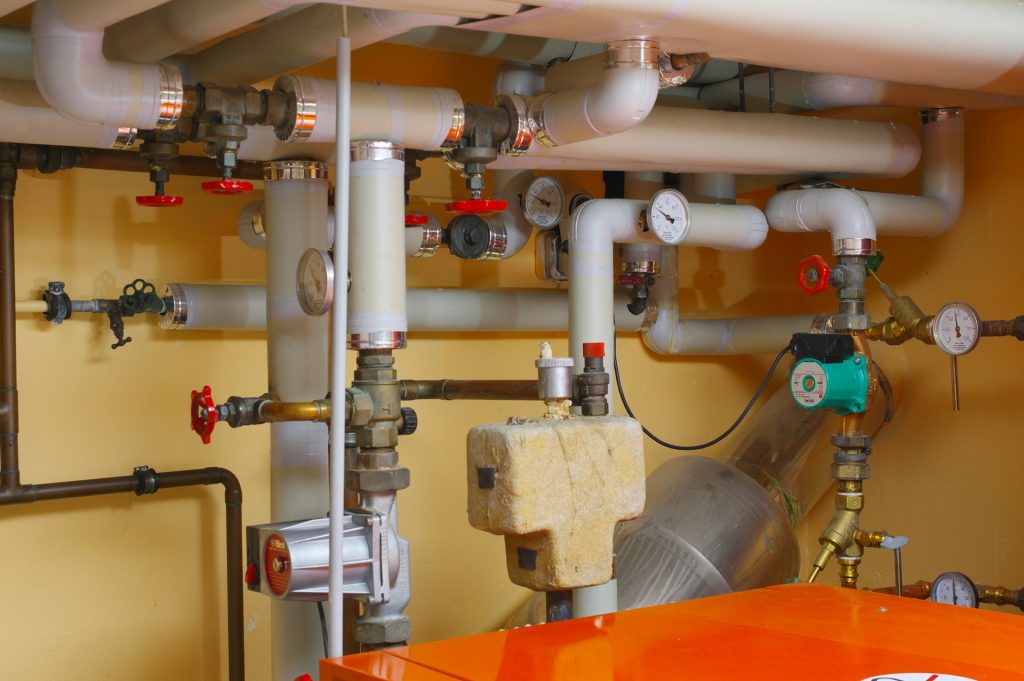
Common causes include overfilling during repressurisation, a faulty Pressure Relief Valve, or a problem with the expansion vessel. A useful clue: if the pressure sits at 1.2 bar when cold but jumps to 3.0 bar as soon as the heating comes on, the expansion vessel’s very likely involved.
High pressure might not seem urgent at first, especially if the boiler’s still working. But left alone, it can cause leaks, worn components, and damage to the system. A sudden, sharp rise isn’t normal. It’s the heating system asking for attention.
How to Reduce Boiler Pressure
If the pressure’s too high, there are a couple of things that may bring it down.
The first is to carefully bleed a radiator. Opening the valve slightly lets a small amount of water out, which lowers the pressure. A radiator at the top of the house, often a towel rail, usually works best for this.
You can also let the system cool. As the water contracts, pressure will naturally fall. That can help with minor spikes, but it won’t fix an underlying fault.
Important bit: if the pressure climbs back up after you’ve lowered it, something else is going on. It’s often the expansion vessel or filling loop. A quick fix is fine once. A repeat problem needs a proper look.
When to Call a Gas Safe Engineer
If you’re constantly adjusting the pressure, get it checked.
Topping up more than twice a year usually points to a small leak somewhere. You should also call a Gas Safe registered engineer if the pressure won’t hold, keeps climbing, or you’re not comfortable using the filling loop yourself. Anything that suggests a leak, such as water coming from the pressure release pipe, needs urgent attention.
In our experience, repeated pressure drops almost always come down to a leak. Sometimes it’s obvious. Sometimes it’s hidden under flooring or behind pipework, because of course it is.
At SD Plumbing & Heating, we can track down what’s really going on, including hidden leaks. In some cases, we use thermal imaging to pinpoint the problem without lifting floorboards. It’s faster, tidier, and a lot less disruptive to your home.
The Bottom Line on Boiler Pressure
Pressure issues are common, and they’re rarely as complicated as they first appear.
Aim for around 1.2 bar when the system’s cold, with a natural rise once the heating’s on. That’s how it’s meant to behave. It’s when the pressure drops repeatedly, climbs steadily, or swings around for no clear reason that you’ve probably got something worth investigating.
If you’re seeing any of the warning signs above, or you’d just like peace of mind before winter, give us a call. Our Edinburgh-based Gas Safe registered engineers will get it looked at properly.